

Small group and 1-to-1 are the two main formats for math tuition in Singapore, and both work well when matched to the right student. But if you’re torn between the two, the decision comes down to your child’s learning style, where they are academically, and the kind of environment that helps them focus and grow.
At The Heuristic Way, we offer both formats and have seen firsthand what makes each effective for each student type. This guide breaks down the key differences so you can make a practical, informed choice.
Key Takeaways
- Small group math tuition in Singapore suits most primary school students, offering peer learning, structure, and personalised attention at a more accessible price point.
- 1-to-1 tuition is genuinely better in specific situations: significant foundational gaps, severe exam anxiety, or highly irregular schedules.
- The quality of the teaching method and the tutor matter more than the format.
- A well-run small group class with personalised worksheets can match or exceed the outcomes of private tuition for most children.
Why the Format Question Actually Matters
Nearly 7 out of 10 parents in Singapore send their children to private tuition, which means the tuition market is enormous and the options are genuinely varied. Most parents default to whichever format feels more premium, which often means 1-to-1. But format alone does not determine outcomes.
A poorly run private session will underperform a well-structured small group class, and vice versa.
Understanding the real differences between the two helps you spend wisely and choose the environment where your child will actually grow.
What Each Format Looks Like in Practice
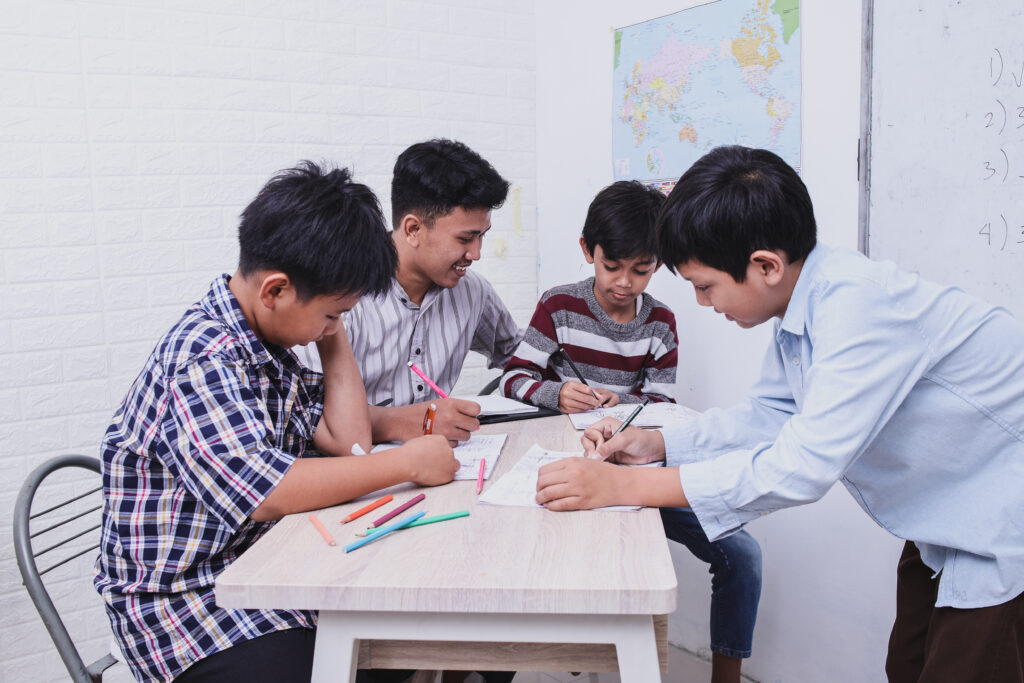
Small group math tuition in Singapore typically runs with 4 to 10 students per session. The tutor teaches the group, addresses questions, and works through individually tailored materials with each student. Sessions usually last 90 to 120 minutes.
1-to-1 tuition is exactly that: one student, one tutor, one session. The full lesson time is devoted to a single child. Sessions typically run 60 to 90 minutes.
A Direct Comparison
| Small Group (4–10 students) | 1-to-1 Private Tuition | |
| Individual attention | Shared, but focused on good programmes | Full session dedicated to one student |
| Peer learning | Yes — a key advantage | None |
| Structured pacing | Depends on programme design | Fully flexible |
| Accountability | Peers create natural motivation | Relies on the child’s self-motivation |
| Best for | Most learners show steady improvement | Significant gaps; specific learning needs |
The Case for Small Group Math Tuition
1. Peer Learning Is a Real Academic Advantage
Research shows that students who explain concepts to peers learn the material better themselves, making greater effort, spending more time on the task, and developing a deeper understanding — and this effect requires at least three students to create meaningful teaching-and-learning dynamics.
In a primary math class, when one child asks why a model-drawing step works a certain way, every student in the room benefits from the explanation. That kind of peer-triggered clarification simply does not happen in a 1-to-1 setting.
2. Healthy Peer Pressure Builds Consistency
Children are social learners. Knowing that their peers are working through the same problems creates a mild but effective form of accountability. Working alongside peers motivates students to push themselves in ways a solo session with a tutor does not naturally replicate. This is particularly useful for children who tend to drift or need external motivation to stay focused.
3. It Is More Sustainable for Most Families
A typical P5 or P6 student attending small-group tuition for three subjects might expect monthly costs of between $960 and $1,500. If your child is taking tuition in math, science, and English, the cost can add up quickly.
Choosing small group tuition for math, where peer learning is especially effective, frees up the budget for 1-to-1 support in a subject where it may be more critical.
4. Structure and Social Learning Suit Most Primary Students
Most primary school children are still developing the self-direction needed to make the most of a private session. In a small group setting, students learn not just from the teacher but also from each other. For example, when one student asks a question, others often realise they had the same doubt but did not voice it. That dynamic keeps children engaged and actively thinking, rather than passively receiving instruction.
The Case for 1-to-1 Tuition
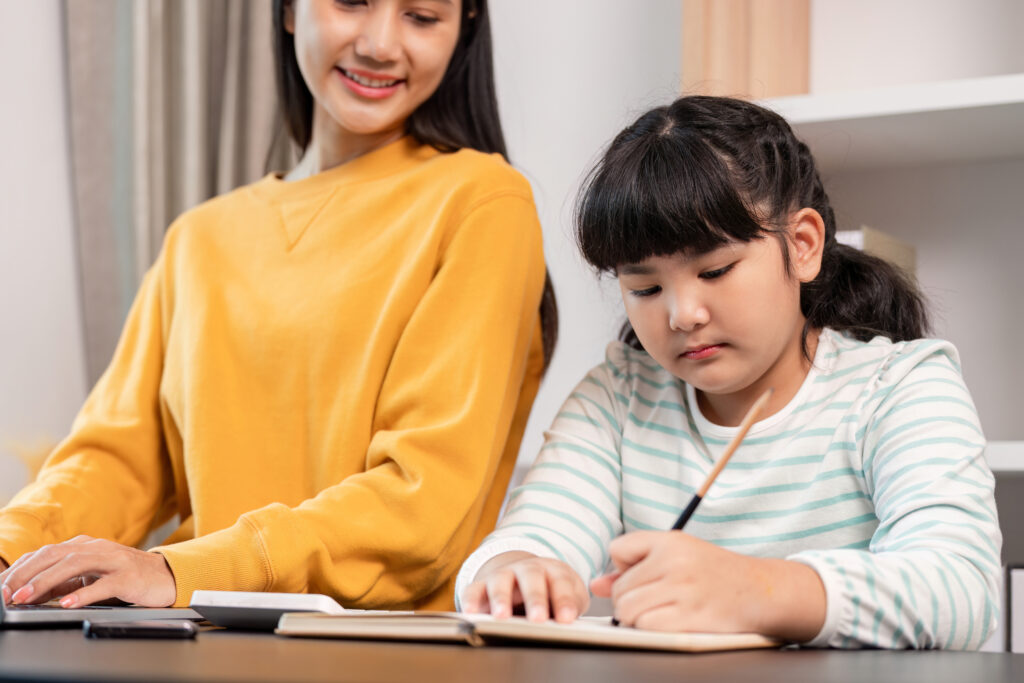
Private tuition is genuinely the better choice in certain specific situations. It is not universally superior, but it is the right tool in these cases.
When the Foundation Gap Is Significant
If your child is in P5 but has unresolved gaps from P3 (e.g., a shaky understanding of fractions or ratios), a group class will move at a pace that leaves those gaps unaddressed. 1-to-1 is best for students with weak foundations, while group tuition can work well for consistent students who primarily need structured practice. Private tuition allows the tutor to go back as far as needed without disrupting a group.
When Your Child Has Significant Anxiety Around Peers
Some children genuinely freeze when they feel classmates are observing them. For these students, the social element of a small group is a source of stress rather than motivation. A 1-to-1 environment removes that pressure and allows them to ask questions, make mistakes, and rebuild confidence without an audience.
When Schedules Are Highly Irregular
Group classes run on fixed timetables. If your child’s schedule changes frequently due to school commitments, CCAs, or family travel, a private tutor can be significantly more flexible. Consistent attendance matters more than format — missed group lessons compound quickly.
The Catch: Not All Small Group Classes Are Equal
The optimal range for structured peer interaction is 3 to 4 students, and effectiveness drops once groups exceed 6 to 7. A “small group” class of 15 to 20 students is not small group learning. It is a classroom with a different name.
When evaluating a small group programme, ask:
- What is the maximum class size?
- Does every student receive a personalised worksheet, or does everyone do the same work?
- Can the tutor explain what each student in the class is currently working on?
- How does the programme handle students who are ahead or behind the group average?
Smaller learning groups produce better outcomes, particularly for subjects like mathematics, where a single misunderstood concept can derail everything that follows. The number on paper matters less than what actually happens during the lesson.
Which Format Is Right for Your Child?
Use this as a quick guide, not a rigid rule:
Choose small group math tuition if your child:
- Is generally keeping up but needs structured reinforcement
- Benefits from the energy and accountability of learning alongside peers
- Is preparing for PSLE and needs consistent, regular practice
- Would thrive with personalised materials within a group environment
Choose 1-to-1 tuition if your child:
- Has significant gaps from earlier years that need targeted rebuilding
- Struggles with anxiety or confidence when learning in front of others
- Has a highly irregular schedule that makes group attendance unreliable
- Needs intensive preparation in a very short timeframe before exams
Consider starting with a small group and reviewing after one term. Most children adapt well to the format. If progress stalls or anxiety remains an issue, transitioning to 1-to-1 is always an option.
Small Group Math Tuition in Singapore Can Deliver More Than You Expect
The assumption that 1-to-1 is always the premium option is not always true. Students who learn well in small groups of 3 to 6 often match or exceed the gains of private tuition, because peer interaction creates a learning dynamic that 1-to-1 settings cannot replicate.
For most primary school children in Singapore, a well-run small-group class with genuinely personalised materials, a capped class size, and a tutor who tracks individual progress is not a compromise. It is often the better choice.
At The Heuristic Way, our small-group math tuition in Singapore keeps class sizes to 4-10 students, with customised worksheets for every child. We also offer 1-to-1 sessions for students who need a different approach. If you are unsure which format suits your child, you are welcome to book a free trial class and see how they respond in the group setting before committing.